

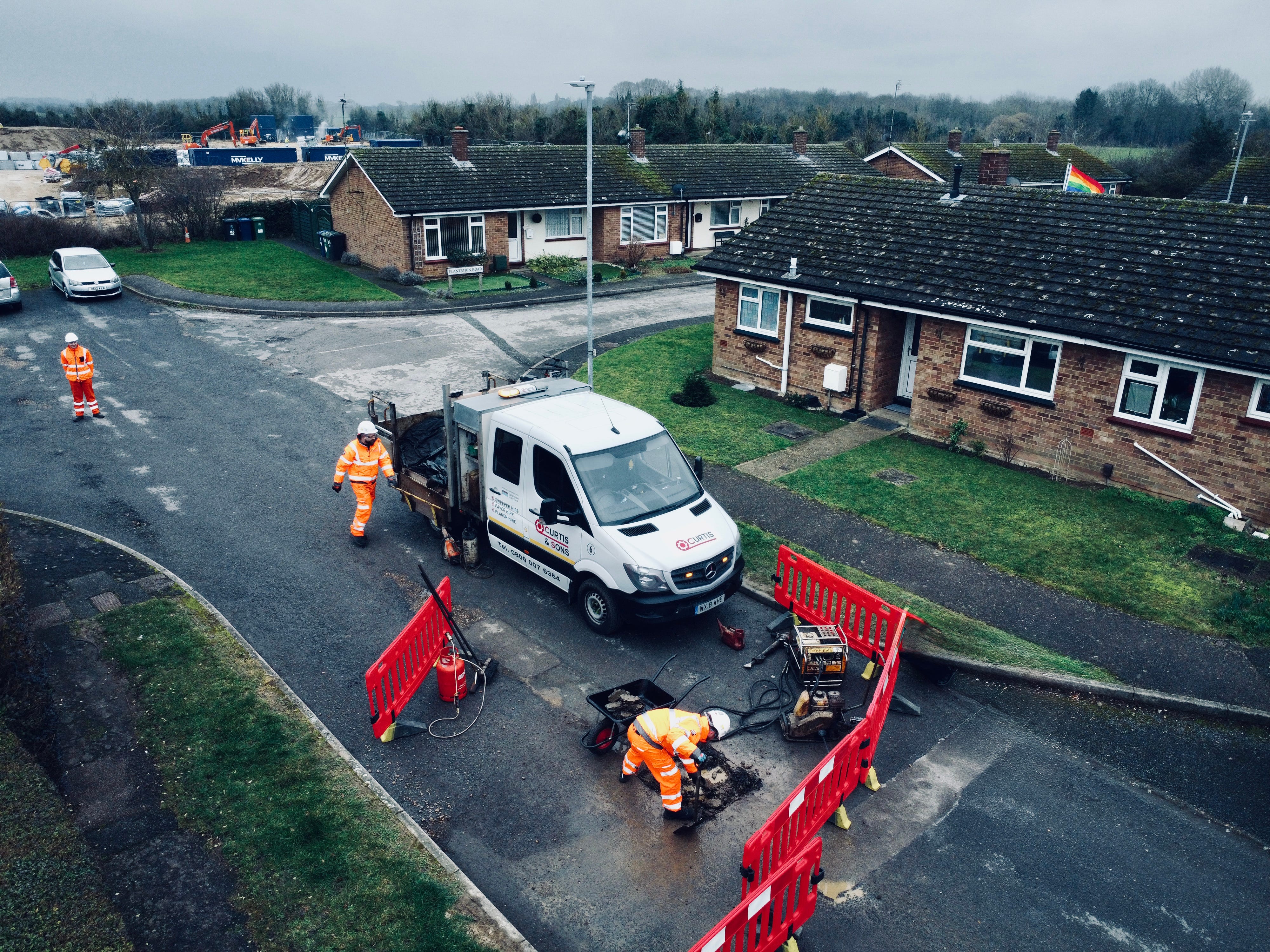
If you've been driving, cycling or walking around the country recently, you've almost certainly noticed a real increase in potholes. My inbox is certainly full of people across Cambridgeshire asking what's going on, and it's not just Cambridgeshire. So what gives? What's happening, and why is this year so much worse?
Note: If you haven’t read my previous post on how we inspect and fill potholes, it’s worth starting there first.

It all started in November.
Before November, I was feeling quite good about the coming pothole season in Cambridgeshire. While potholes always increase markedly in winter, we'd had a really good summer: low levels of outstanding potholes, low levels of customer reports, and we were coming off the back of one of our biggest ever programmes of resurfacing and surface treatments. In theory, things were looking positive.
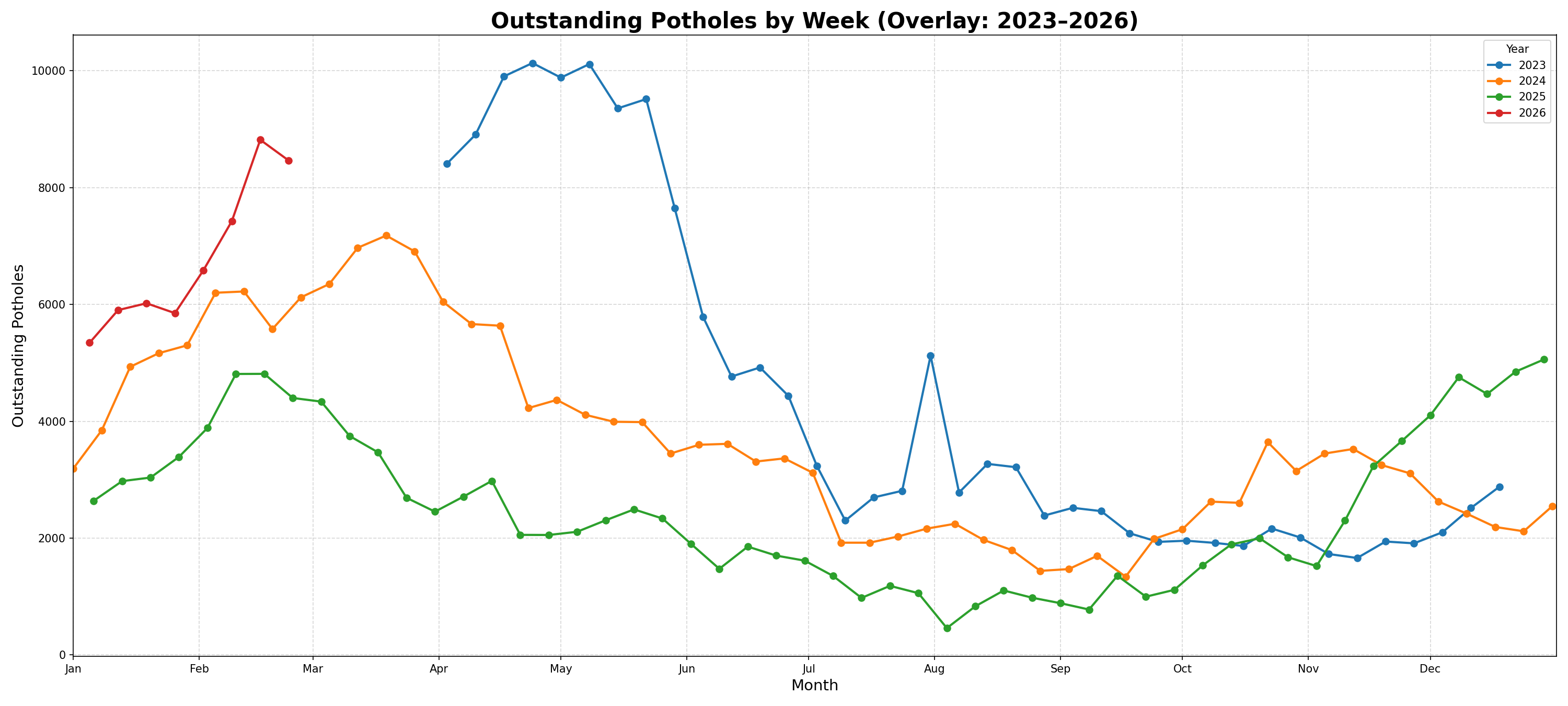
That started to change in November. A brief cold spell hit and our inspectors noticed a marked increase in potholes. There wasn't a huge spike in public reports at this point, but you can see from the graph below (the green 2025 line) that it led to a rise in outstanding potholes, much earlier than the typical January peak. We were watching it closely.
Warning: The data and graphs in this article are based on highways data that I’ve processed myself. Depending on how data is extracted, grouped, or defined (for example, week start dates or classification rules), numbers may vary slightly. If you try to recreate these figures via FoI or other systems, you may see differences.
Roll forward to January, and we had a few days of snow, several freeze-thaw cycles, and what felt like two solid months of rain. This caused a big spike in potholes, and this time it correlated with a large, sudden increase in public reports. We went from around 500 pothole reports in week 2 of 2026 to almost 2,000 in week 3. For context, in autumn we were sitting at roughly 200 a week, roughly ten times lower than the peak.
Looking at the customer reports graph below, you can see exactly where the bad weather hit.
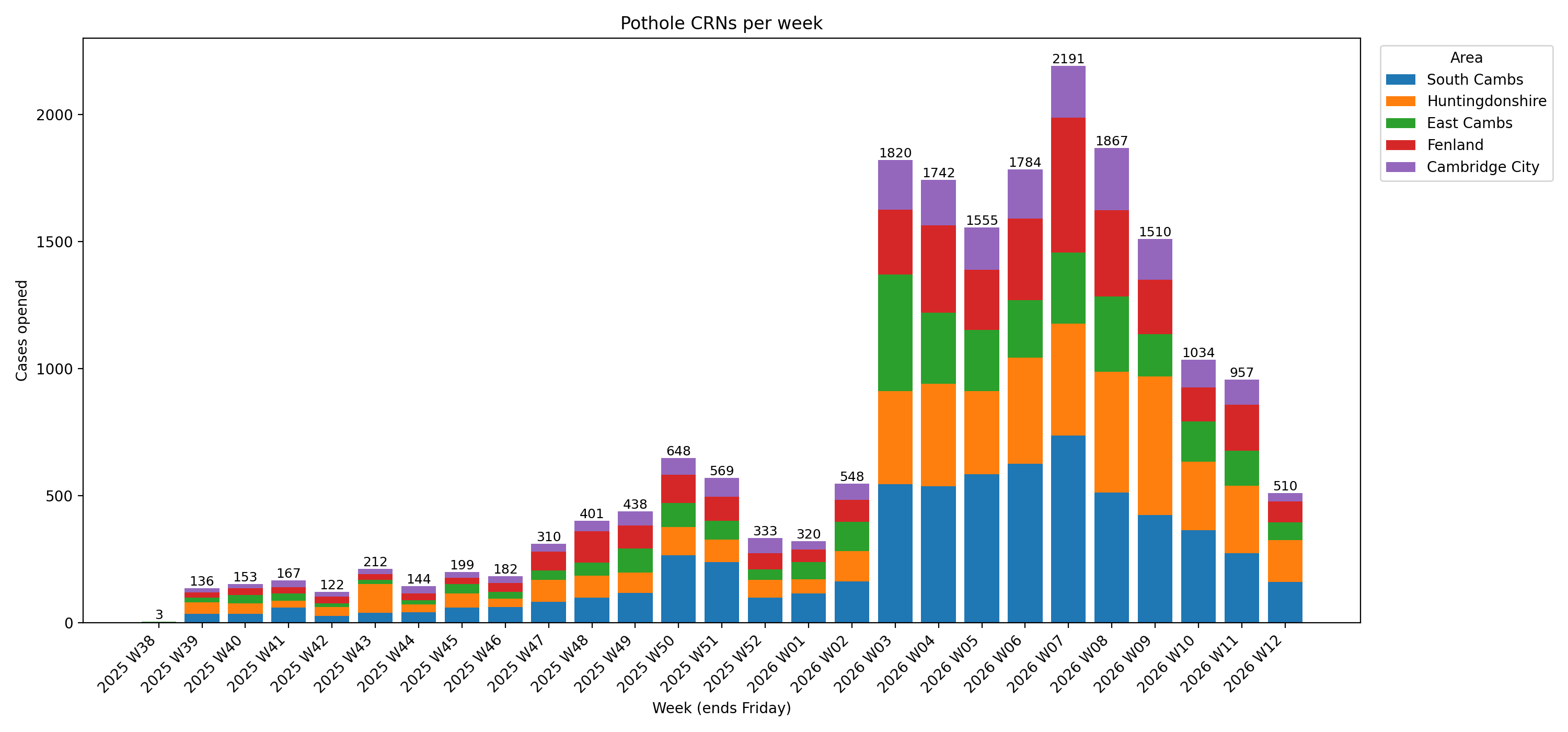
Reports have now started to come down (around 500 last week), but we're still left with a significant backlog of both outstanding customer reports and outstanding pothole repairs.
What’s caused this?
The short answer: the weather, acting on roads already in a weakened state.
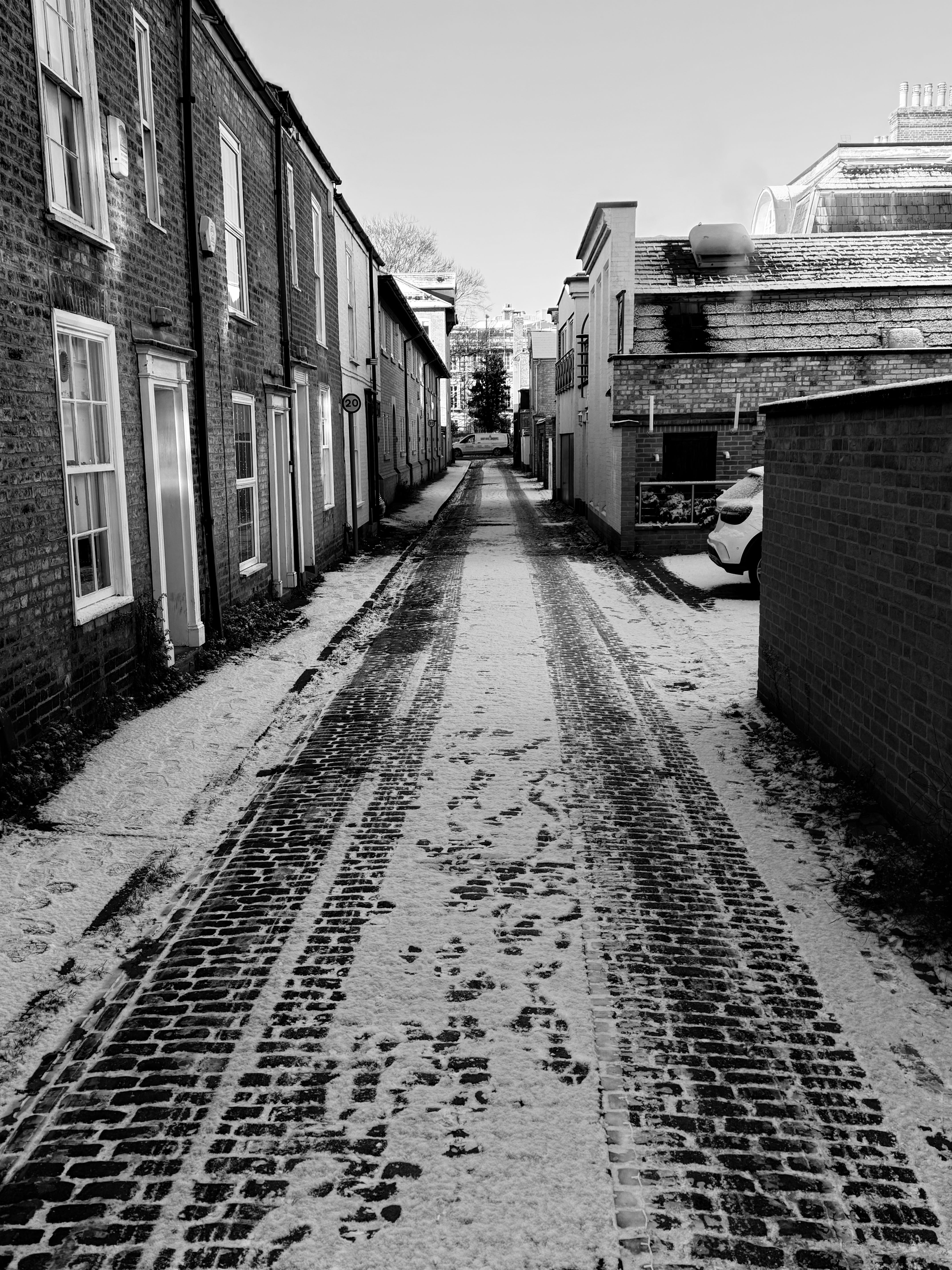
The freeze-thaw cycle is the classic pothole trigger, and you can see it clearly in our data. It’s not the lowest temperatures that do the most damage. It’s the repeated action of rain followed by temperatures going above and below freezing. Every time the temperature crosses that 0°C threshold, any water sitting in a crack expands as it freezes, opening the crack wider. Do that enough times, and you get a pothole.
This is made significantly worse on roads with lots of pre-existing cracks, because those cracks are exactly where the water gets in. And that’s where Cambridgeshire’s wider problem becomes relevant.
We're grappling with an £800 million backlog in highway maintenance, built up over decades of underinvestment in preventative work under successive Conservative rule both locally and nationally. That means far more of our network is in a weakened state, and far more vulnerable to breaking up in bad conditions. Despite our record investment in maintenance since taking over, this isn't something that can be fixed quickly.
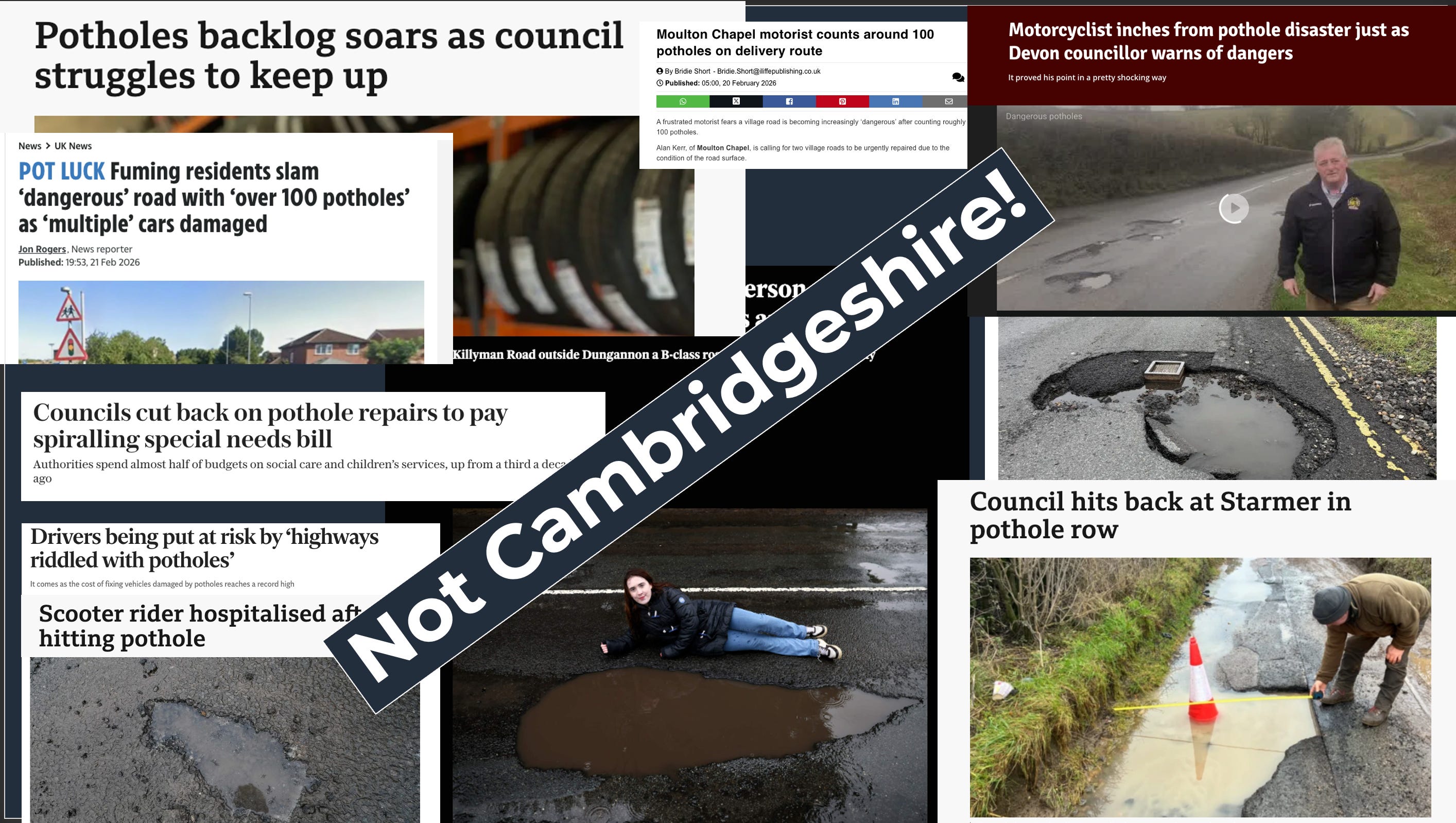
Importantly, this problem is not unique to Cambridgeshire. The British Asphalt Alliance estimates there is now an £18 billion maintenance backlog across England, up from £10 billion in 2019. Indeed David Giles chair of the Asphalt Industry Alliance recently described the countries local roads as a “National Disgrace”.
Where has the backlog come from?
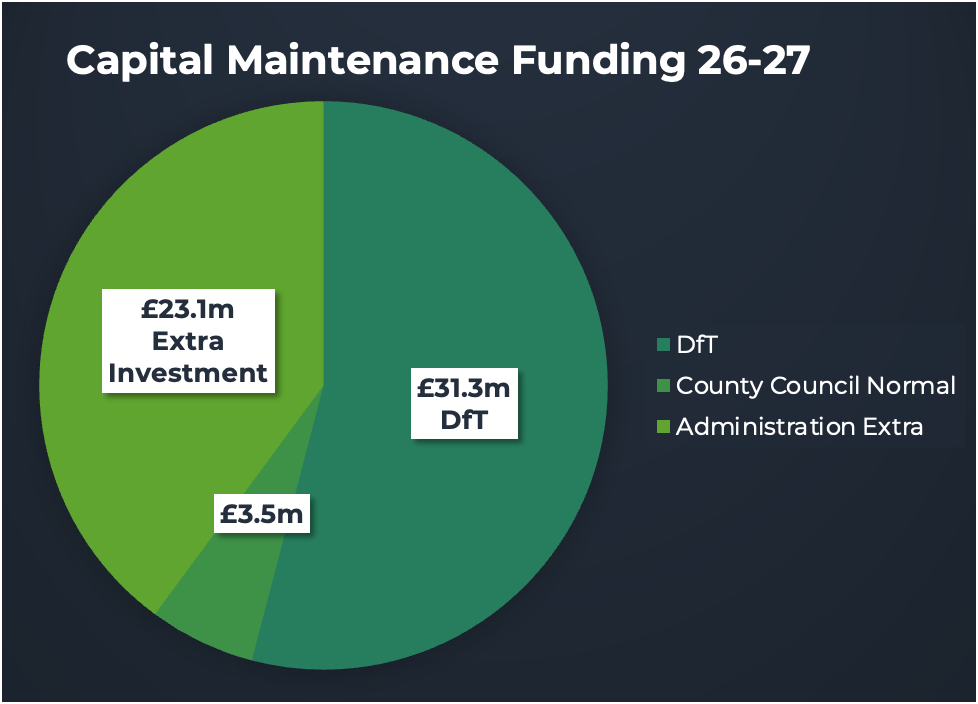
Underfunding, mostly. A common misconception is that road tax or fuel duty comes to us. It doesn't. It goes to central government, which then allocates a portion back to councils. This year we're receiving a record £31.3 million from the new Labour Government. That sounds great until you realise that the Department for Transport's own funding formulas show we need £58.3 million just to maintain the network in its current (not exactly brilliant) condition. As a Lib Dem-led administration we've made up that difference with record investment of our own (£80 million over four years), but historically that hasn't always been the case, and the cumulative effect of years of underspending is a very large backlog.
It's also worth noting the relentless rain throughout January and February. This reduced the productivity of our crews and increased repair failure rates. If you can't fully dry a hole before filling it, any remaining water can freeze and push the repair straight back out. This is a particular problem for Dragon Patchers, which really struggle in wet weather.
Enough excuses - what are you doing to fix potholes NOW?
When we saw the surge in December, we started rapidly scaling up our crews. Given the wet weather, we’ve leaned much more heavily on traditional repair crews this year rather than Dragons.
Here’s how we’ve escalated:
Standard summer: ~6 crews
Standard winter: ~10 crews + 2 Dragon Patchers
Early January: 15 crews + 2 Dragon Patchers
Start of February: 16 crews + 3 Dragon Patchers
Mid-February: 21 crews + 3 Dragon Patchers
Late February: 24 crews + 3 Dragon Patchers
Now (March): 30 crews + 3 Dragon Patchers
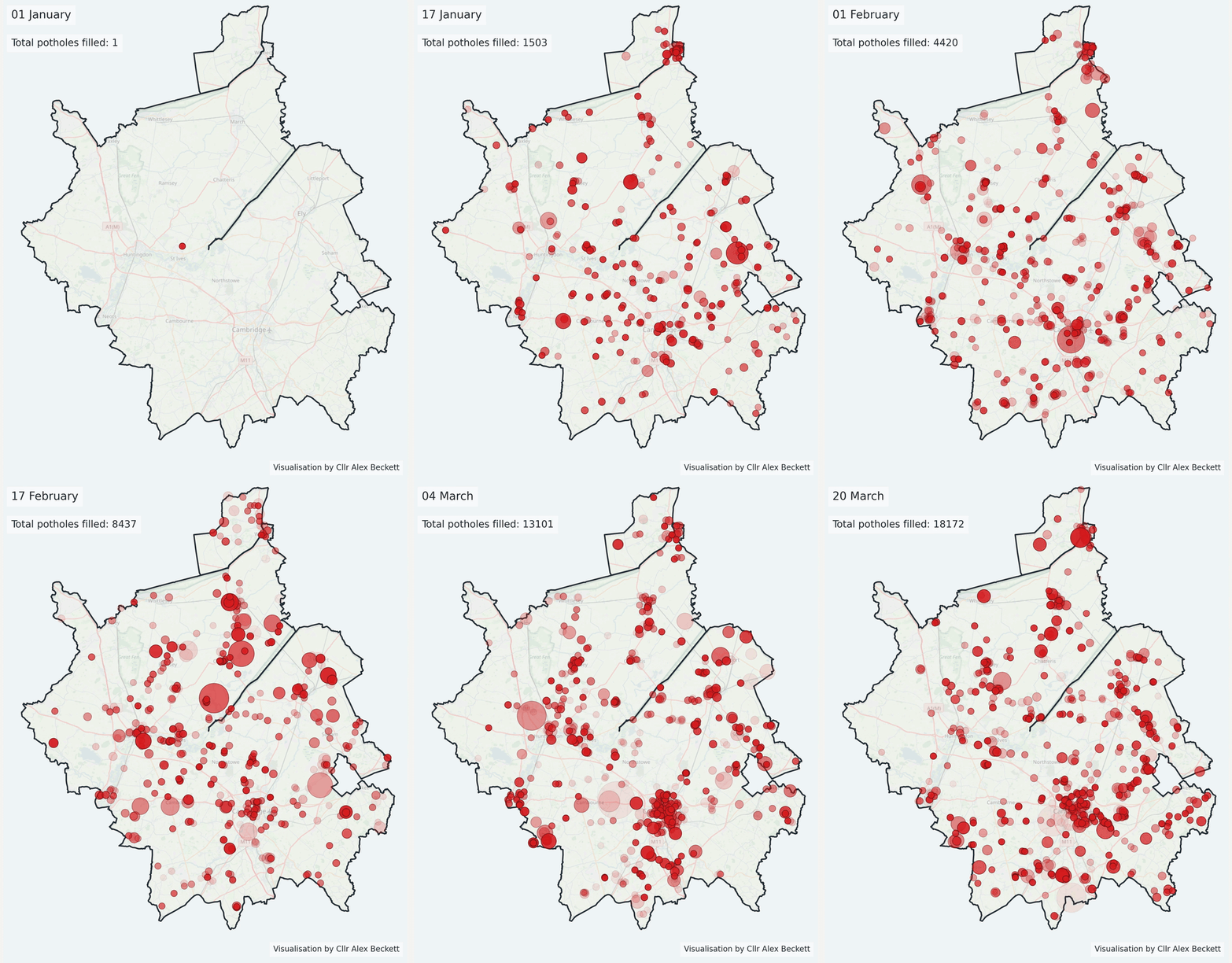
That’s three times the normal winter capacity. Since the start of the year, we’ve filled well over 15,000 potholes across the county.
We’ve also scaled up our internal highways maintenance officer resource. One of this year’s real challenges has been the sheer volume of customer reports and inspections stretching our in-house team thin, leading to longer response times for marking up defects, which then delays the repair queue. It’s much harder to dynamically grow that team compared to repair crews, and while we’ve brought people in from other areas, it’s something we’ll need to look at properly ahead of next winter.
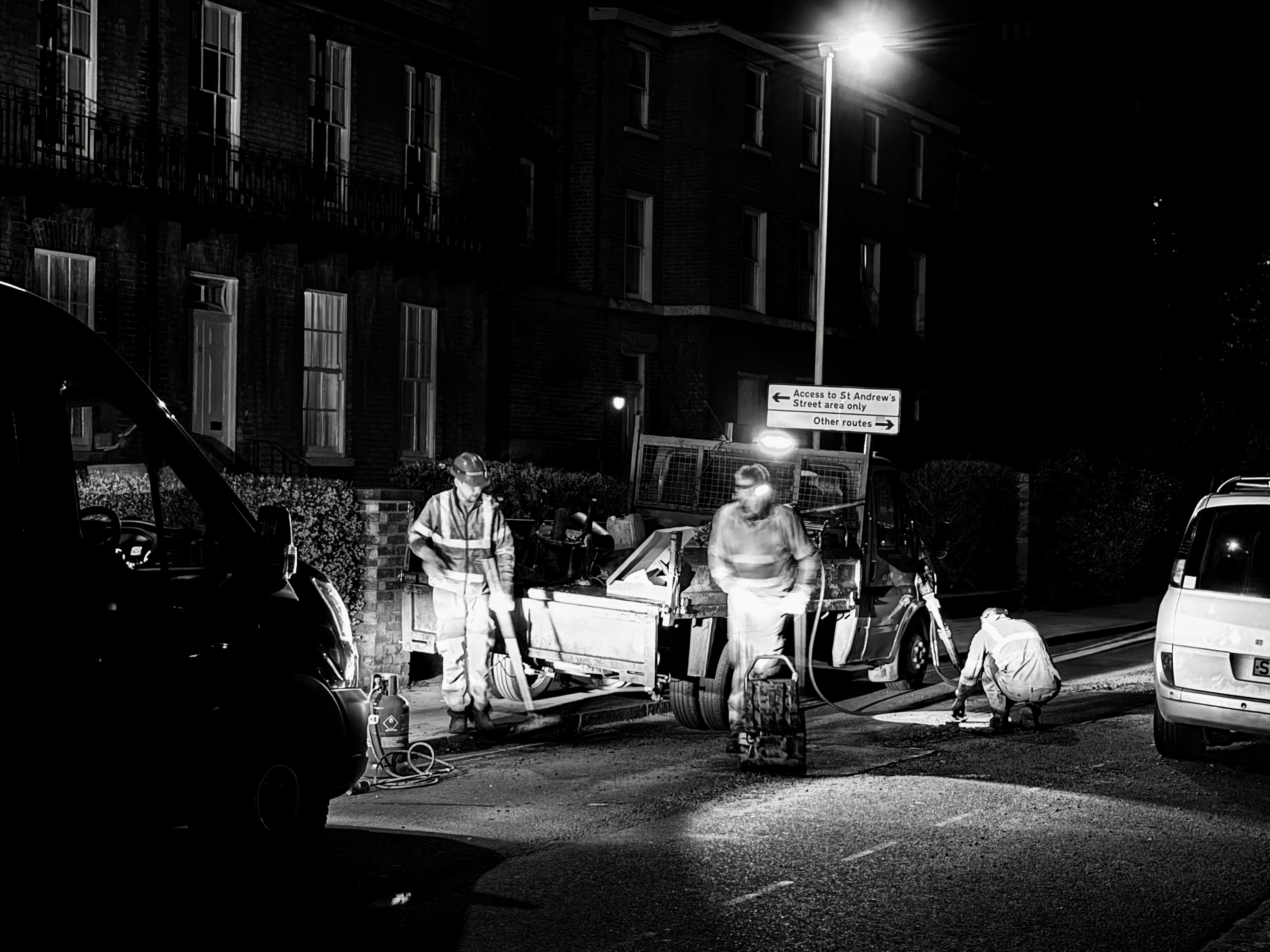
In urban areas (particularly Cambridge City and South Cambridgeshire) we’ve also had real challenges getting onto the network safely. Roads are congested, and closing carriageways to carry out repairs is disruptive and slow to coordinate. In response, we’ve introduced much closer working between the streetworks and maintenance teams, and we’ve added dedicated night crews fixing defects around the clock.
So what next?
There are now positive signs in the data. Customer reports have fallen back to normal winter levels. The pothole backlog is still high, but it is coming down from its peak.
With improving weather, we’ve also been able to restart our surface treatment and resurfacing programme, and that matters. The only real way out of this in the long term is to invest enough in prevention to stop potholes forming in the first place, rather than simply chasing them.
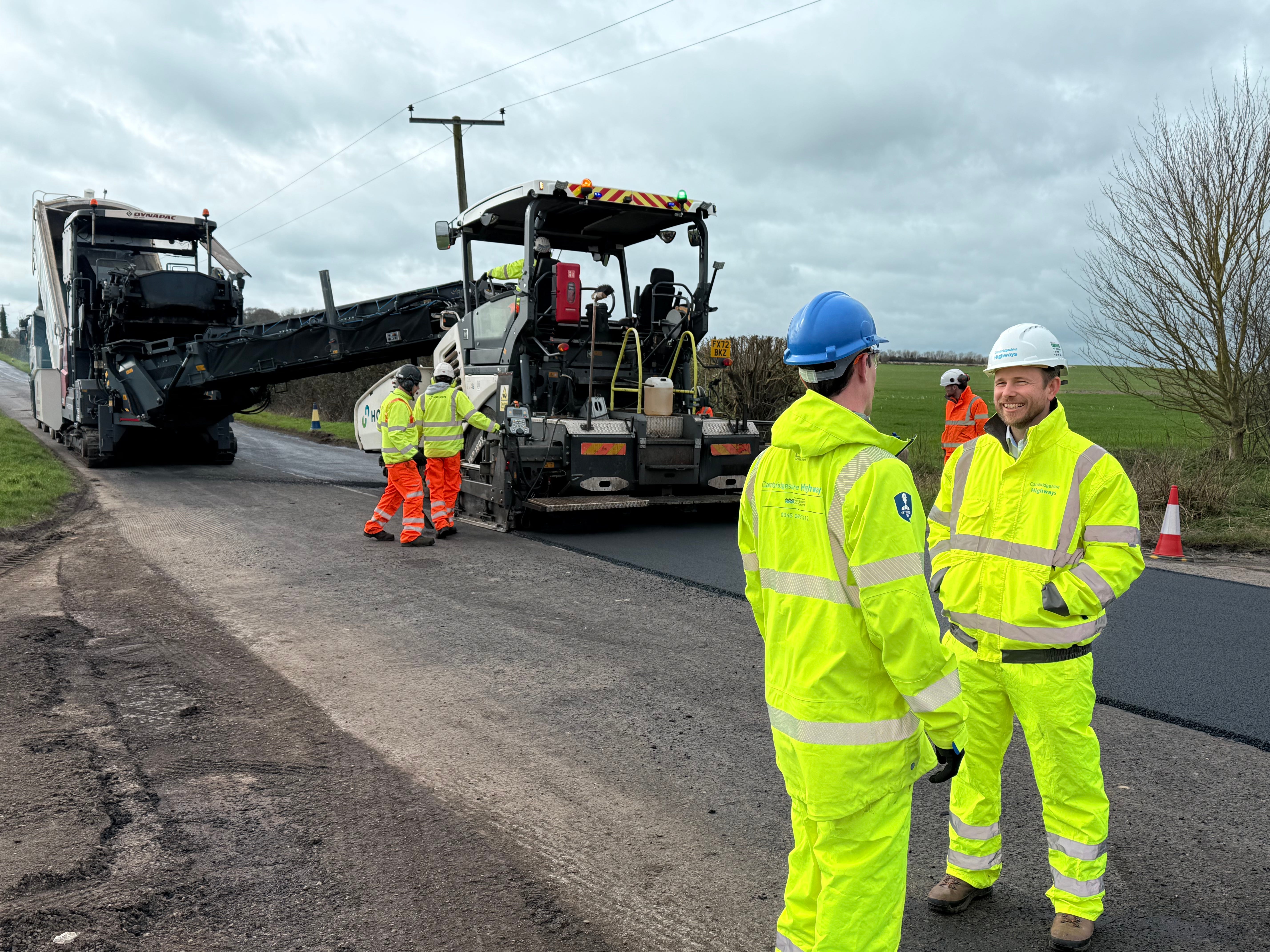
Out with the surfacing teams on Granham Road
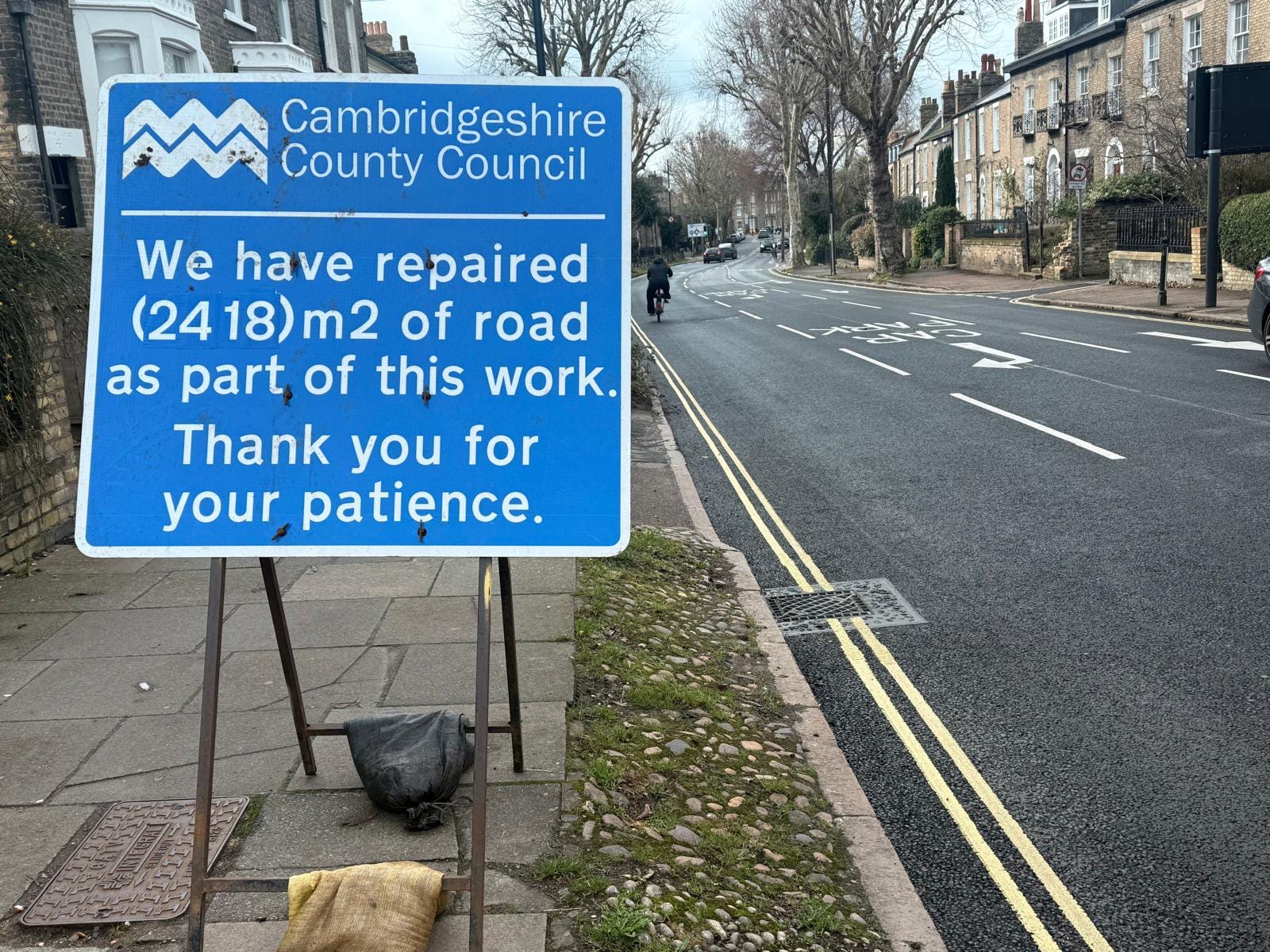
This has been an incredibly tough pothole season. It’s not quite as bad as 2013, and we’ve had far better data and tools at our disposal this time, which has genuinely helped us respond faster and more effectively. But there’s no hiding from how hard it’s been. Things aren’t back to where they need to be, and we still have a lot of work ahead over the coming months. We are making progress though, and some of our new systems have really come into their own this season.
Thank you for your patience. Please do keep reporting potholes — it genuinely helps us target our crews — and we’ll get to them as fast as we can.
I'm not sure anyone doubts the cause of the potholes it's the supervision of the repair work that voters feel needs to be done much better.
I made an FOI request after you mentioned that the contractors are penalised for faulty workmanship and forced to repair, for free, any potholes where the repair has failed.
Given how quickly repairs seem to fall apart I was interested to see how much money had been recovered for taxpayers.
Reference: FOI-202601007608
Date: 09/02/2026
The Cambridgeshire County Council response read :-
------------------------------------------
The Council’s highways contractor is required to make good any identified quality issues within 28 days of being notified about them, which includes pothole repairs.
Where the contractor fails to address these issues in 28 days, the Council assesses the cost of correcting the defect and the contractor is required to fund this re-work, fully.
The Council undertakes random audits and inspects pothole repairs, as well as other work undertaken by the contractor, to ensure required contractual and quality standards are being met. Since October 2025, the Council has undertaken 122 defect inspections across 2,403 reactive maintenance orders.
10 of these defect inspections resulted in the contractor not having been assessed to meet the required standards, with repairs being reworked fully at their expense.
------------------------------------------
So out of 2,403 holes repaired since October only 122 have been quality inspected and of those 122 only 10 have been repaired for free.
It doesn't seem to me that the inspection or quality feedback loop is working very well for taxpayers.